
Moving to Orlando? A Realistic Guide for Young Adults, Couples and Families
So you want to move to Orlando
Greater Orlando is growing fast, and newcomers are arriving for jobs, weather, entertainment and a different quality of life. But choosing where to live here is less about finding the “best neighborhood” and more about understanding how Central Florida actually works.
Moving to Orlando can look deceptively simple from the outside.

Find a house or apartment.
Move to Florida.
Enjoy the sunshine.
Go to Disney whenever you want.
Done.
Then you actually get here.
You discover that “Orlando” can mean downtown Orlando, Orange County, Winter Park, Lake Nona, Winter Garden, Oviedo, Kissimmee, Maitland or a neighborhood 30 miles from the place you originally thought you were moving to.
You learn that two homes that appear close together on a map can produce completely different commutes.
You learn to take afternoon thunderstorms seriously.
And eventually you discover something else:
Greater Orlando can be a very good place to build a life, but where you live should be determined by the life you actually want to have.
That applies whether you’re 25 and starting a career, moving here as a couple, raising children, working remotely or starting over somewhere new.
First, Understand How Big Orlando Has Become
This is not the Orlando of 30 years ago.
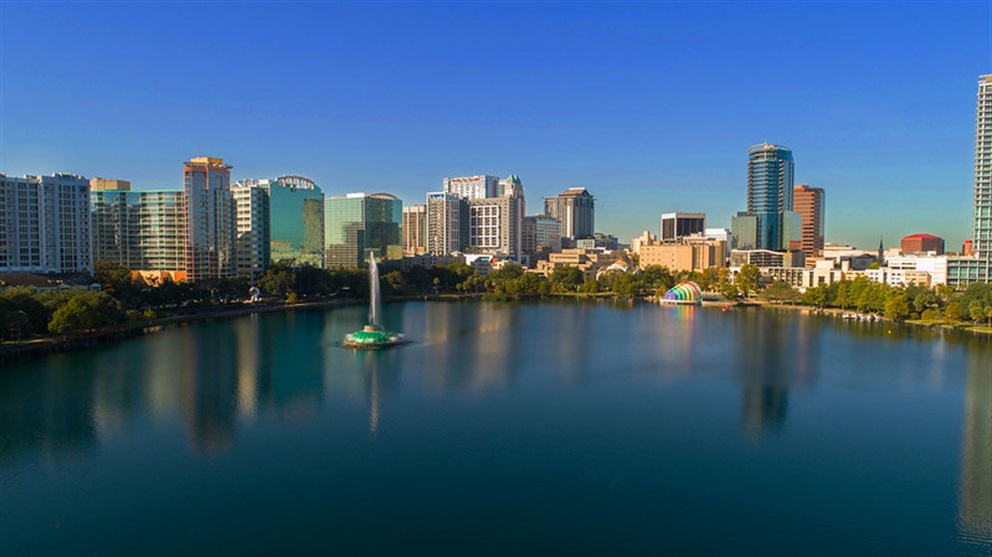
The Orlando-Kissimmee-Sanford metropolitan area reached an estimated 2,957,672 residents in 2025, according to the U.S. Census Bureau. That was up almost 38,000 people in a single year. (Census.gov)
In other words, Greater Orlando is approaching three million residents.
That growth has created more restaurants, entertainment, cultural institutions, hospitals, neighborhoods and employment opportunities.
It has also created traffic, housing pressure and development that continues pushing farther outward.
So when someone tells you they live in “Orlando,” that statement alone doesn’t tell you very much anymore.
Orlando’s Economy Is Broader Than Tourism
Tourism remains enormously important to Central Florida.
But don’t assume everyone here works for Disney, Universal or a hotel.
The region has substantial employment in healthcare, aerospace and defense, simulation and training, technology, logistics, financial services, construction and professional services.
The Orlando Economic Partnership reported that the metro area added 20,600 jobs during the year ending in June 2026, more than Miami, Tampa and Jacksonville combined over that period. (News)
That’s encouraging for someone moving here for opportunity.
But the usual rule still applies:
If possible, know where you are going to work before deciding where you are going to live.
That one decision can dramatically affect your Orlando experience.
Your Commute Should Help Choose Your Neighborhood
Orlando is still largely a driving metropolitan area.
This is one of the most important things newcomers need to understand.
A beautiful apartment that saves you $200 per month may not feel like a bargain after you discover that your commute requires crossing Interstate 4 at rush hour every morning.
Likewise, living close to Disney doesn’t necessarily make sense if your job is in Lake Mary.
And living far west of Orlando because you found a large new house can become frustrating if you work downtown five days a week.
Before signing a lease or buying a house, drive the commute at the actual time you would normally make it.
Google Maps at 2 p.m. on Sunday is not the same thing as Orlando at 8 a.m. Tuesday.
Orlando Does Have Public Transportation — But Know Its Limits
Central Florida’s transit system is improving, but it isn’t yet something most residents can rely upon for every trip.
SunRail currently runs through a north-south corridor stretching from DeLand through Sanford, Lake Mary, Maitland, Winter Park and downtown Orlando to Kissimmee and Poinciana. It has 17 stations and currently operates Monday through Friday. (SunRail)
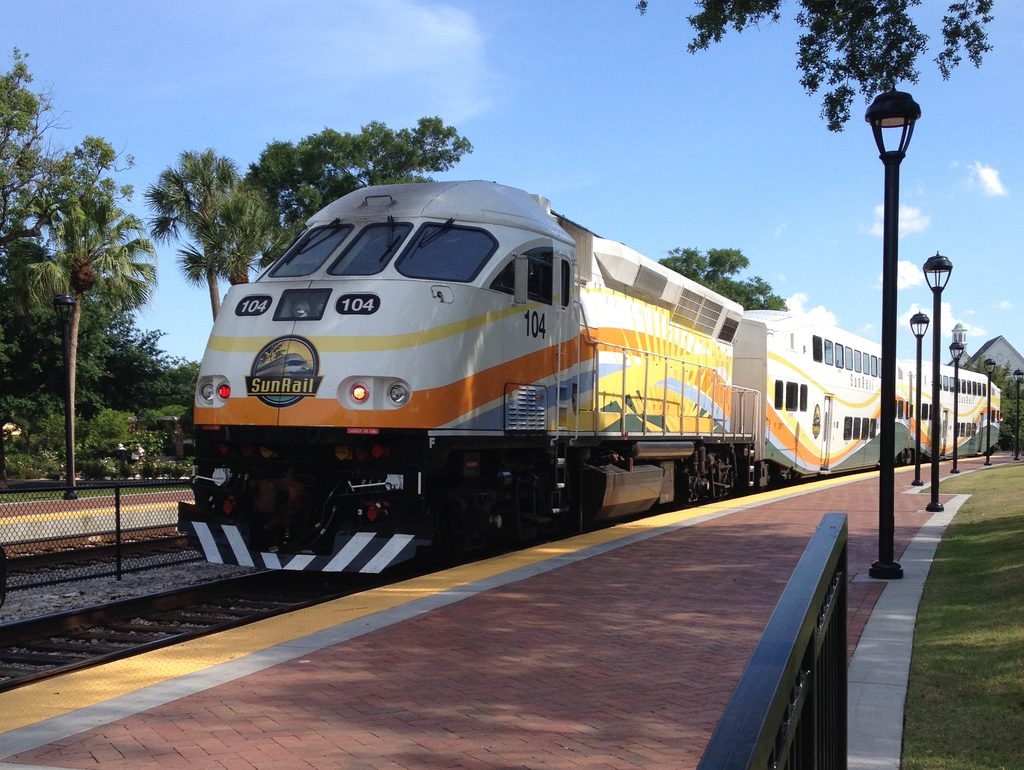
LYNX operates the region’s bus network, while Brightline provides higher-speed rail between Orlando International Airport and South Florida. (GoLynx)
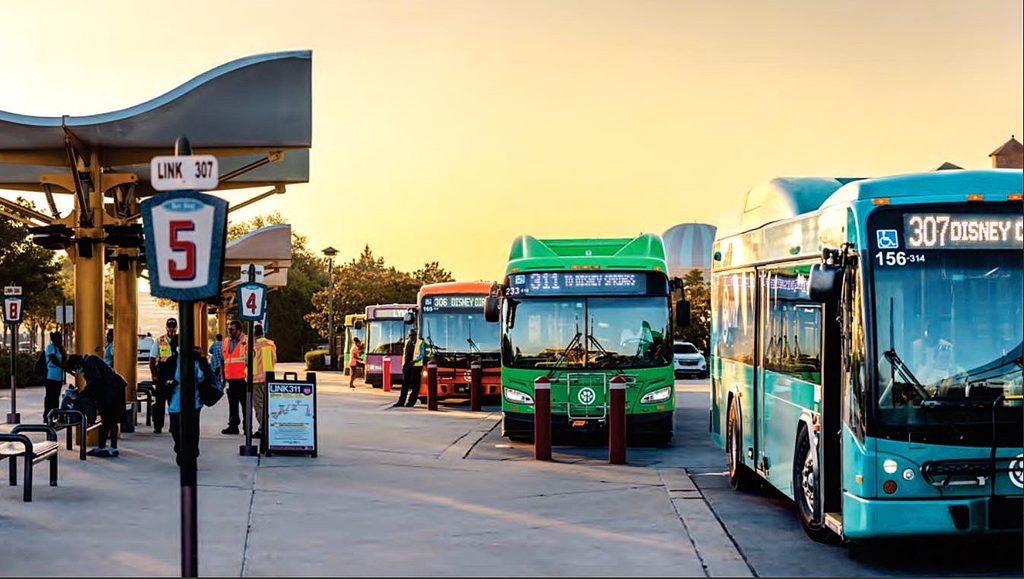
If your home and workplace happen to align with a useful transit corridor, that’s worth considering.
For most households, however, at least one car remains extremely useful and often essential.
Decide What Kind of Orlando Life You Want
This is where relocation guides often go wrong.
They create lists such as “best neighborhood for singles” and “best neighborhood for families.”
Real life isn’t that simple, and people don’t fit neatly into categories.
A better approach is to choose based on priorities.
Do you want to walk to restaurants?
Do you want nightlife nearby?
Are you looking for a detached home and a yard?
Do you want access to trails?
Do you need to reach the airport frequently?
Do you work downtown?
Do you want newer construction?
Do you prefer an older established neighborhood with mature trees?
Do you want to live close to the theme parks — or nowhere near them?
Those questions will narrow your search much faster than someone’s generic Top 10 neighborhood list.
Here are several very different parts of Greater Orlando worth exploring:
If You Want Urban Orlando, Look Near the Center
Downtown Orlando and surrounding neighborhoods offer a very different lifestyle from the newer suburban parts of Central Florida.
Thornton Park puts restaurants, Lake Eola and downtown events nearby.
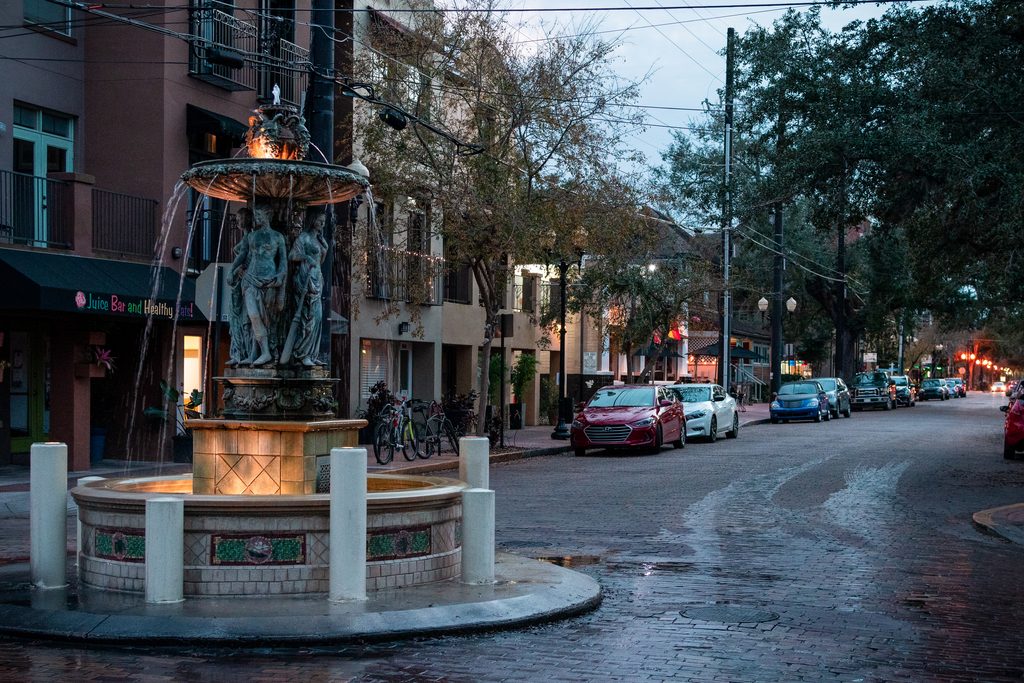
Mills 50 offers independent restaurants, bars, murals and one of Orlando’s strongest concentrations of locally owned businesses. The City of Orlando describes the district as a culturally diverse area with shops, restaurants, bars and one of Florida’s largest Vietnamese communities. (City of Orlando)
Ivanhoe Village, College Park, Audubon Park, the Milk District and SoDo each have their own personalities as well.
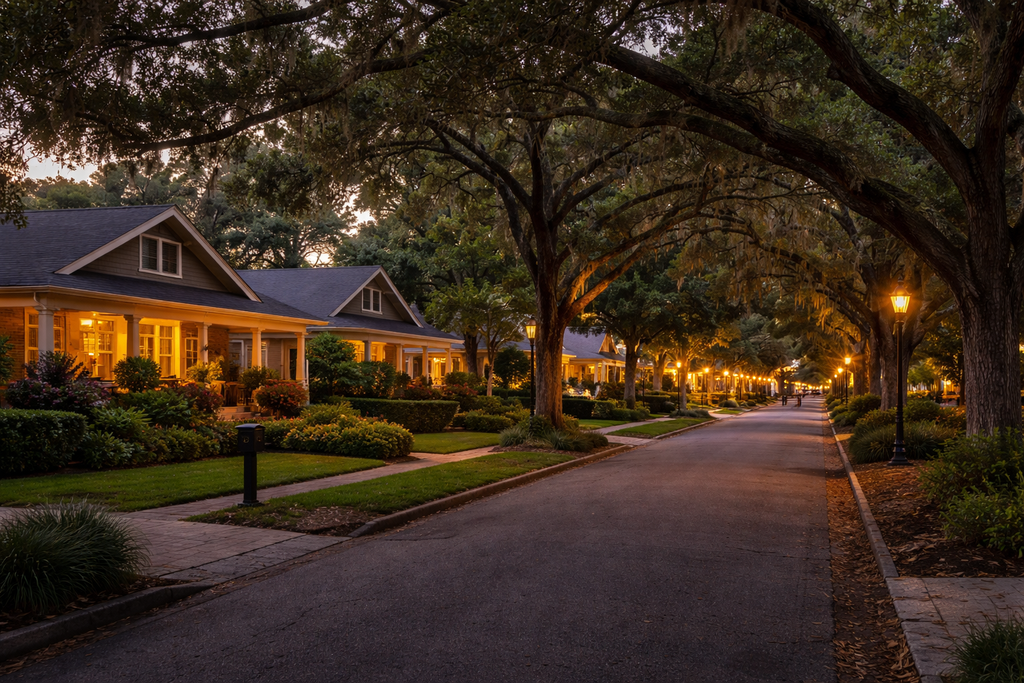
The City of Orlando currently recognizes multiple Main Street districts that have collectively attracted more than $2.7 billion in investment and 2,500 new businesses over the life of the program. (City of Orlando)
These areas tend to make sense for people who value access to restaurants, events and established neighborhoods more than having the largest possible house.
And being close to Lake Eola Park, Kia Center and the Walt Disney Theater at Dr. Phillips Center for Performing Arts gives downtown residents easy access to markets, sports, concerts and performing arts.
Baldwin Park Offers a Different Version of City Living
Baldwin Park is worth exploring if you like the idea of being near central Orlando but prefer a master-planned community environment.
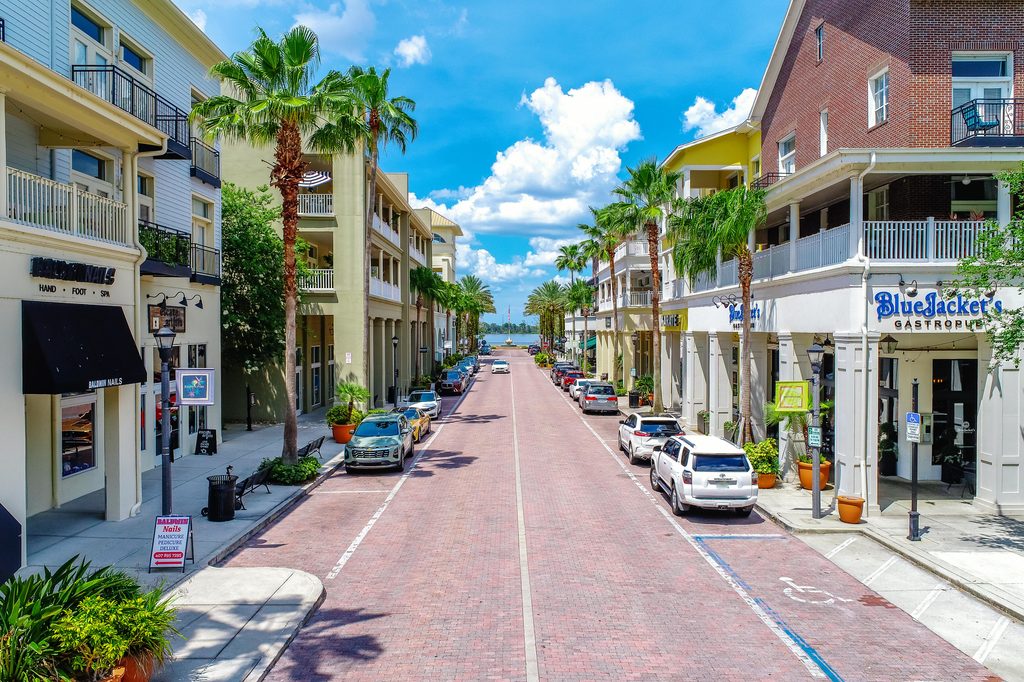
It combines apartments, townhomes and detached houses with lakes, sidewalks, parks and a village center.
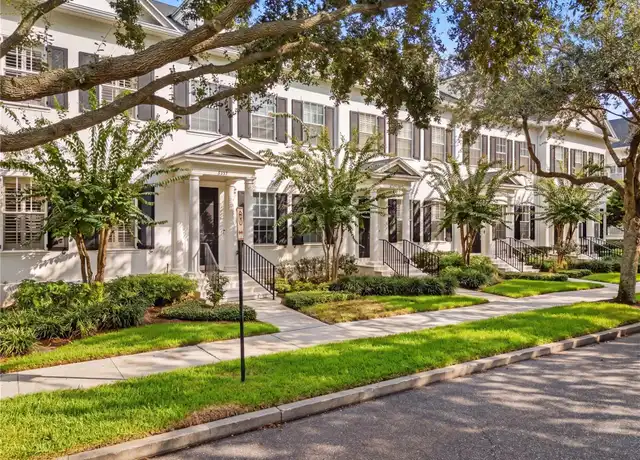
The important point isn’t that Baldwin Park is universally “better.”
It’s that it represents a different tradeoff.
You may give up some of the spontaneous energy of downtown in exchange for more planned green space and a more residential environment while remaining relatively close to central Orlando.
Lake Nona Is Orlando’s Newer Side
Drive southeast and Orlando starts looking completely different.

Lake Nona has become one of Central Florida’s major growth areas, particularly around healthcare, medical research and newer development.

It also has relatively convenient access to Orlando International Airport.
That can make the area worth investigating for people working around Medical City, the airport or southeastern Orange County.
The tradeoff is distance.
If your social life, workplace or favorite destinations are primarily downtown or northwest of Orlando, living far southeast can mean spending more time in the car than you expected.
Winter Park Has Its Own Identity
Winter Park is technically its own city, but functionally it is part of the Greater Orlando lifestyle.
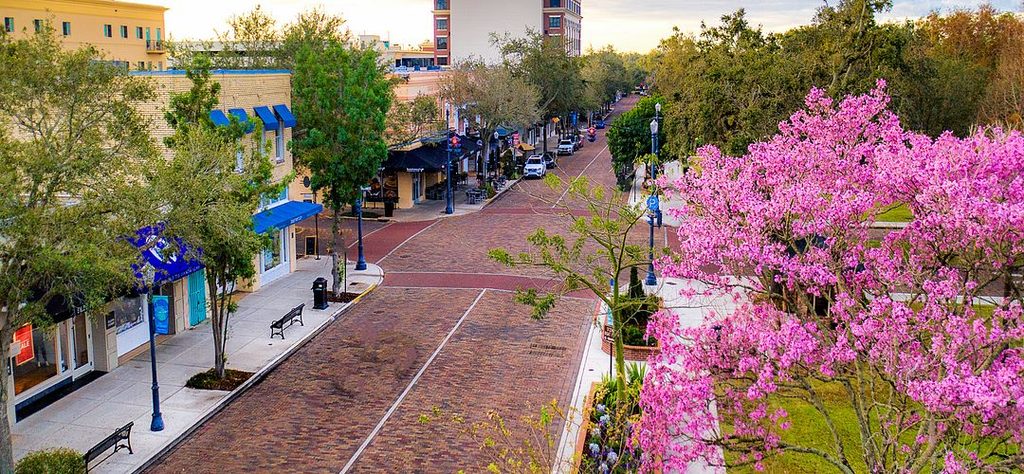
Park Avenue, Central Park, museums, restaurants and the chain of lakes give it an identity very different from suburban Central Florida.
It is also connected to Orlando by SunRail.
The city operates parks and recurring recreational programs, including its Family Fun programming and community events. (City of Winter Park)
Housing prices in and near the most desirable parts of Winter Park can be considerably higher than many other parts of the metro, so location comes at a cost.
But if you value walkability, established neighborhoods and cultural amenities, it belongs on the list of places to explore.
Winter Garden Shows How Far Greater Orlando Has Expanded
West of Orlando, Winter Garden has transformed dramatically.
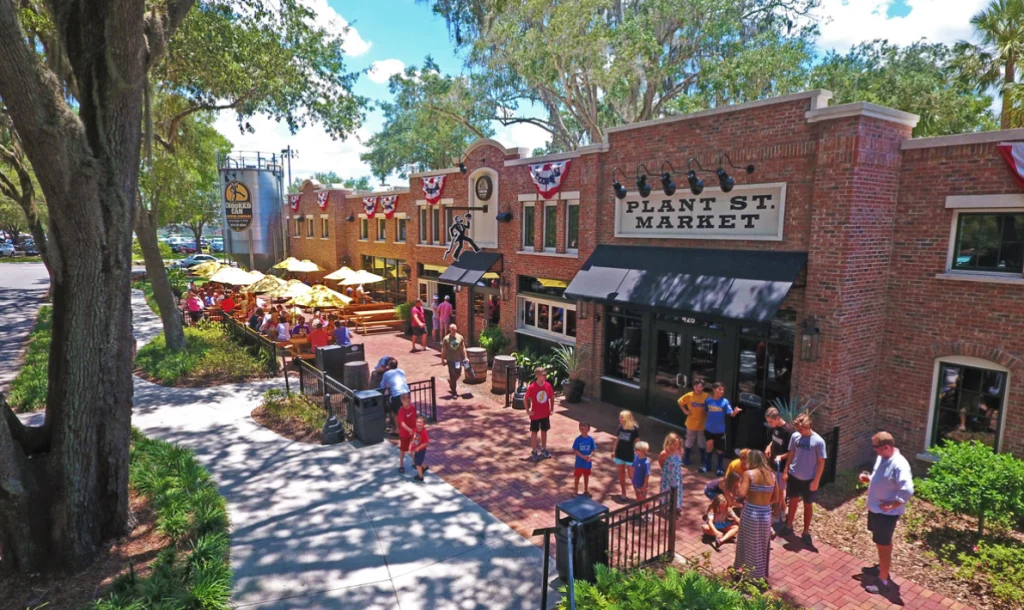
Its historic downtown includes restaurants, shops, museums and the West Orange Trail running directly through the city center.
The City of Winter Garden says downtown now attracts roughly 1.4 million visitors annually. (Winter Garden)
Nearby Horizon West has seen enormous residential development as Greater Orlando continues expanding westward.
For someone working in western Orange County or the attractions area, that geography may be appealing.
For someone commuting to UCF or northeast Orlando every day, the same location could become exhausting.
Again:
There is no universally perfect Orlando neighborhood. Geography matters.
What Does Housing Cost?
Orlando is no longer the inexpensive Florida destination many people remember.
As of July 2026, Zillow reports the typical Orlando home value at about $374,196, with an average rent of approximately $1,903 per month. (Zillow)
Those are citywide numbers.
Actual prices can vary enormously depending on neighborhood, housing type, age, amenities and distance from employment centers.
The encouraging news for buyers is that the market is no longer behaving like the frenzy seen during the pandemic years. Zillow reports that Orlando home values were down about 1.9% from a year earlier and that roughly two-thirds of sales were closing below list price in June. (Zillow)
That suggests buyers may have more negotiating room than they did several years ago.
But don’t look only at the mortgage payment.
Florida ownership costs can include homeowners insurance, flood considerations, HOA fees, property taxes, maintenance, air-conditioning expenses and possibly CDD assessments in newer communities.
Always calculate the total monthly ownership cost.
Rent Before Buying? There Is a Good Argument for It
If you’re completely unfamiliar with Central Florida, renting for your first year isn’t necessarily a bad idea.
Orlando neighborhoods can look surprisingly similar online while feeling completely different in person.
Living here for several months teaches you where you actually spend your time.
You may discover that the neighborhood you originally wanted is much farther from work than expected.
Or that an area you ignored turns out to be perfect for your routine.
Buying a house is expensive.
Discovering six months later that you picked the wrong side of the metropolitan area is even more expensive.
If You Have Children, Research the Address — Not Just the Neighborhood Name
School assignments deserve special attention.
Orange County Public Schools assigns students to schools based primarily on their residential address, and OCPS provides a Find My School tool specifically for checking which schools serve an address. (OCPS)
Don’t assume that because two homes share the same neighborhood name they feed into exactly the same schools.
Boundaries matter.
OCPS also operates magnet programs at the elementary, middle and high-school levels, although those programs have application schedules and admission processes. (OCPS)
So if schools are important to your move, verify assignments before signing a contract, not afterward.
And look beyond a single numerical school rating.
Programs, class offerings, magnet opportunities, transportation, extracurricular activities and your child’s individual needs may matter just as much.
Florida’s Lack of State Personal Income Tax Is Real
One financial advantage newcomers often hear about is legitimate.
Florida does not impose a state personal individual income tax. (Florida Department of Revenue)
That can be meaningful for someone relocating from a state with relatively high income taxes.
But it doesn’t mean living in Florida is automatically inexpensive.
Housing, insurance, tolls and other costs can offset part of that advantage.
The smartest relocation calculation compares your entire household budget, not one tax line.
Prepare for the Weather You Actually Get
Orlando weather is one of the reasons people move here.
Winters can be fantastic.
There are plenty of days when the rest of the country is shoveling snow and Central Florida residents are eating outside.
Summer is another story.
It is hot.
It is humid.
And afternoon thunderstorms become part of daily life.
Air conditioning isn’t really optional infrastructure in Florida.
Neither is thinking about hurricanes.
Central Florida’s inland location means Orlando usually avoids the direct coastal storm-surge risk faced by beachfront communities, but hurricanes and tropical storms can still bring damaging winds, flooding and extended power outages.
Anyone moving here should eventually assemble a basic hurricane kit and understand whether a prospective property lies in an area susceptible to flooding.
One of Orlando’s Biggest Advantages Is What You Can Do When You’re Not Working
This is where Greater Orlando becomes difficult to beat.
You have world-class theme parks.
But you also have professional sports, performing arts, museums, restaurants, neighborhood festivals, farmers markets, live music and outdoor recreation.
You can spend Saturday at East End Market, attend a Magic game that night and paddle at Wekiwa Springs State Park the next morning.
Central Florida is also positioned between both coasts.
The Atlantic beaches and Space Coast are accessible for day trips, while Tampa and the Gulf Coast are reachable in the opposite direction.
Brightline now gives Orlando a rail connection to South Florida from its station at Orlando International Airport. (Brightline)
Living here makes much more of Florida accessible than tourists usually realize.
Younger Adults May Find Orlando Easier Socially Than Expected
Moving to any new city as an adult can be strange.
You no longer have school automatically putting hundreds of people your age around you.
Orlando does at least give newcomers plenty of ways to build a social routine.
Sports leagues.
Running clubs.
Fitness groups.
Young-professional organizations.
Trivia nights.
Breweries.
Volunteer organizations.
Arts events.
Gaming communities.
Theme-park fan groups.
Outdoor clubs.
Neighborhood festivals.
Professional associations.
The challenge isn’t necessarily finding people.
It’s getting yourself out of the house consistently enough to meet them.
One of the easiest approaches is to pick one recurring activity instead of constantly looking for one-time events.
A weekly running group or sports league gives relationships time to develop.
Households With Children Have an Enormous Amount to Explore Too
Central Florida has a ridiculous amount of family recreation.
And it doesn’t all cost theme-park money.
Parks, splash pads, libraries, nature centers, community recreation programs, museums, sports leagues and festivals operate throughout the region.
Then there is the obvious advantage of having many of the country’s largest attractions nearby.
Being a local changes how you use them.
You don’t necessarily need to turn every visit into a 12-hour vacation marathon.
You can go for several hours and come home.
That is an entirely different experience from visiting Orlando once every five years.
The Theme Parks Are a Benefit — But Don’t Choose Your Entire Life Around Them
This deserves saying.
Living 10 minutes from Disney sounds wonderful when you’re imagining Saturday nights at EPCOT.
It may sound less wonderful when your workplace is 35 miles away.
The same applies to Universal.
Treat the attractions as one amenity among many.
Your job, housing budget, commute, schools if applicable, healthcare access and normal weekly routine will affect your quality of life far more than how quickly you can reach Space Mountain.
Orlando Is Still Becoming Orlando
Perhaps the most interesting thing about moving here right now is that Greater Orlando is still changing rapidly.
Downtown redevelopment is underway.
New neighborhoods continue to appear.
Transportation infrastructure continues evolving.
Major employers are expanding.
The restaurant and cultural scenes are becoming increasingly sophisticated.
The Orlando Economic Partnership reported in July that the region’s labor force had grown by more than 18,000 people over the previous year while wages were rising faster than inflation. (News)
That growth creates legitimate problems.
Traffic.
Development pressure.
Housing costs.
Loss of open land.
Crowded infrastructure.
But it also means newcomers aren’t arriving in a stagnant city.
They’re arriving in a metropolitan area that is still figuring out what it wants to become.
The Best Advice Before Moving Here
Don’t choose Orlando based on the Orlando you experienced on vacation.
Spend several days here as though you already live here.
Drive to work during rush hour.
Go grocery shopping.
Explore neighborhoods at night.
Check the schools if you need them.
Drive from a prospective home to the places you expect to visit regularly.
Look at your total housing cost.
Try the restaurants.
Walk the parks.
Sit in traffic.
And then ask yourself a much more useful question than:
“Is Orlando a good place to live?”
Ask:
“Can I build the life I want here?”
For a growing number of people, the answer appears to be yes.
Nearly three million people now call Greater Orlando home.
They aren’t all here for the theme parks.
Many came for jobs.
Some came for the weather.
Some came to raise children.
Some came to build careers.
Some came because Florida offered a fresh start.
And eventually, like everyone who stays long enough, they discovered that Orlando is much bigger than the city visitors see from a hotel room.

Hector
Just a guy with a lot of thoughts on a lot different things. This site is where I can share some of those thoughts. I'm in Defense and Aerospace and we will leave it at that.


You May Also Like

EPCOT Food & Wine Festival 2026: Dates, Food, Concerts & Local Tips

Orlando Air Show 2026: F-22 Raptor, Tickets, Times & What to Know