Orange County Accepts Tourism Tax Recommendations: What It Could Mean for Residents
Orange County Accepts Tourism Tax Recommendations
Orange County commissioners have accepted a new set of recommendations for spending future tourism-tax revenue. No projects have actually received the money yet, but the proposals could eventually bring new museums, parks, environmental improvements, cultural attractions and major investments to communities across Orange County.
When visitors stay in an Orange County hotel, vacation rental or other short-term lodging, they pay an extra tax.
Most residents probably never see it.
But the money involved is enormous.
Orange County’s 6% Tourist Development Tax, commonly called the TDT or hotel tax, now generates more than $400 million a year. Orange County welcomed 76.7 million visitors last year, giving local government a revenue source that few counties in America can match. (Orange County Board Records)
The question is what Orange County should do with that money.
On August 25, the Orange County Board of County Commissioners unanimously accepted the final report from its Tourist Development Tax Citizen Advisory Task Force, which recommended moving forward with 12 projects and programs for possible future funding. (Spectrum News 13)
That sounds like the county just approved a huge collection of projects.
It didn’t.
And that distinction is important.
What Orange County Actually Did
The commissioners accepted the recommendations.
They did not yet award the money.
County staff were instead directed to work with the Orange County Comptroller to determine how much tourism-tax money is realistically available, how much could be paid from existing funds, what might require borrowing against future TDT collections, and how the various projects would affect the county’s desired reserve of roughly $300 million. (Spectrum News 13)
The commissioners will return later for the decision that really matters:
Which projects actually get funded, and how much does each receive?
That means residents should look at the current list as a strong indication of Orange County’s priorities, rather than a collection of fully approved construction projects.
Still, those priorities are interesting.
And unlike some previous tourism-tax spending debates, a surprising amount of this year’s list consists of things Orange County residents could actually use.
Four County Programs Rose to the Top
Some of the strongest recommendations weren’t giant stadiums or convention projects.
They were countywide programs.
The task force’s four highest-priority county initiatives included additional money for smaller tourism-related projects, environmental restoration, ecotourism and arts and cultural programs. (CF Public)
One proposal would provide $20 million per year for five years to Orange County’s tourism-tax grant review program, creating a pool of money for smaller and medium-sized projects that otherwise might never compete successfully against massive institutional requests.
That could be important.
Not every worthwhile attraction needs to cost $500 million.
A collection of smaller museums, cultural sites, recreational facilities and community attractions distributed throughout Orange County could potentially spread tourism benefits far more widely.
Cleaner Lakes and Rivers Could Become a Tourism Investment
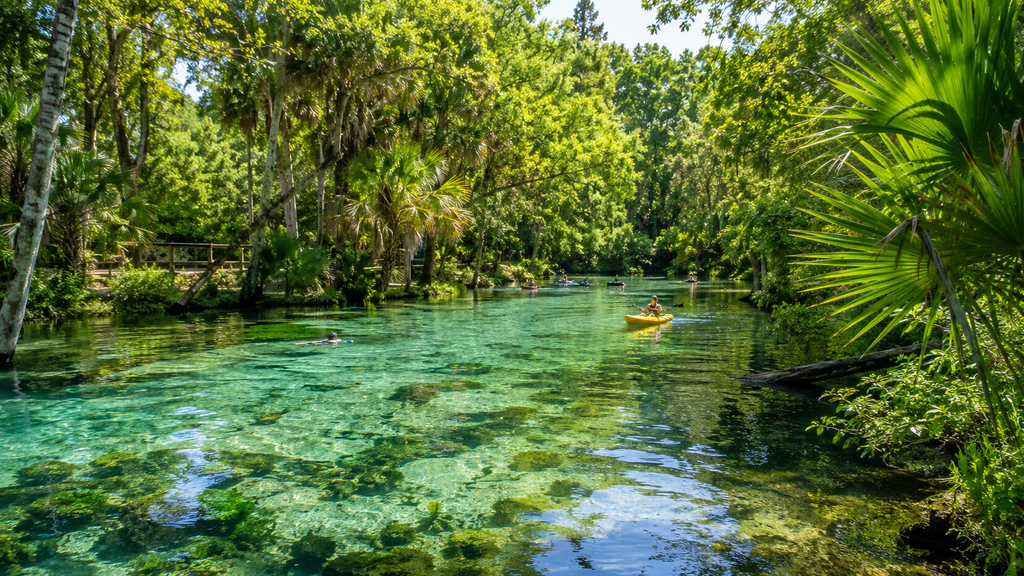
Another proposal would direct $5 million annually toward a tourism-focused lake and river restoration program.
According to the task-force recommendation, the program could address more than 100 miles of publicly accessible lakeshores and river areas. (CF Public)
This may be one of the more interesting ideas on the list because the benefit isn’t limited to tourists.
Visitors may come here to kayak, fish, paddle and experience natural Florida.
But residents use the same waterways.
Cleaner shorelines, restored habitat and improved public access can therefore support tourism while simultaneously improving quality of life.
That’s a very different kind of tourism investment from building another attraction in the International Drive corridor.
It is an investment in the place itself.
Ecotourism Could Receive a Major Boost
Orange County’s proposed ecotourism grant program could receive another $10 million annually.
Central Florida’s natural environment is one of the region’s most underused tourism assets.
When visitors think of Orlando, they understandably think of Disney and Universal.
But Central Florida also has lakes, springs, wetlands, birding areas, hiking, paddling and wildlife experiences.
Encouraging ecotourism could give visitors another reason to venture beyond the attractions while directing more tourism activity into communities that historically haven’t received the same level of visitor spending.
That could become particularly important in northwest Orange County around Lake Apopka.
Orange Audubon Could Build a New Natural History Center
One of the projects that advanced is a request from the Orange Audubon Society for approximately $20 million toward a new natural history center near Lake Apopka. (CF Public)
The proposed center would sit on a former nursery property and complement the increasingly popular Lake Apopka Wildlife Drive.
Supporters told commissioners that the wildlife drive already attracts roughly a quarter-million visitors annually. (Spectrum News 13)
This is exactly the kind of project that could serve two audiences.
Birders and eco-tourists would gain another destination.
Local families would gain an educational and recreational resource.
And Apopka and northwest Orange County could receive a larger share of tourism activity that is normally concentrated much farther south.
A Children’s Museum Could Come to Winter Garden
Another recommendation would provide up to $25 million toward the proposed I AM Children’s Museum, being developed by nonprofit 8Waves near downtown Winter Garden.
The roughly $30 million project is envisioned as approximately 20,000 to 35,000 square feet of indoor and outdoor educational experiences, depending on the final design, with connections to the West Orange Trail and restoration of a historic property. Organizers estimate it could eventually attract around 250,000 visitors per year. (Gmg Wkmg)
For families in West Orange County, this could be one of the most directly useful proposals on the list.
Orange County does not currently have the type of large dedicated children’s museum found in many other major metropolitan regions.
This would be marketed to tourists, but local children could obviously use it too.
It could also bring additional visitors into downtown Winter Garden, potentially benefiting nearby restaurants and businesses.
The concern will be transportation and parking.
Winter Garden’s historic downtown is already very popular, and another major attraction could increase congestion if access isn’t planned carefully.
Eatonville Could Receive a Significant Cultural Investment
Several recommended projects focus on Eatonville, one of Central Florida’s most historically important communities.
Dr. Phillips Charities has requested approximately $60 million toward an Eatonville Museum of Culture and History on the historic Hungerford property. The plan includes a private contribution from Dr. Phillips Charities and ultimately returning the property to the town. (Spectrum News 13)
A separate Town of Eatonville Community Redevelopment Agency proposal for approximately $22.5 million to support a heritage-tourism district also advanced. (Mast Newsroom)
That could have an impact well beyond tourism.
Eatonville is one of the oldest incorporated African American municipalities in the United States and is inseparably connected with writer Zora Neale Hurston.
Investment in cultural tourism could help preserve that history while bringing visitors and economic activity into a community that sits only a few miles from Orlando’s major cultural institutions but rarely receives comparable tourism attention.
This is another example where tourism money could potentially preserve something residents value regardless of whether a visitor ever sees it.
Arts and Culture Could Receive More Money
Orange County’s Arts and Cultural Affairs program was also recommended for an increase of up to $5 million annually. (CF Public)
That may sound small compared with some of the headline-grabbing construction requests.
But funding local arts organizations can have an unusually broad reach.
The money can support theater companies, museums, musical organizations, festivals, exhibitions and cultural programs throughout the county.
Mayor Jerry Demings noted earlier this summer that Orange County had already doubled its investment in local arts and cultural organizations to approximately $32 million. (OCFL Newsroom)
For residents, this is one of the clearest examples of tourism revenue producing something they can enjoy directly.
Visitors may help pay for it.
Locals can attend the performances.
IMMERSE Could Receive Long-Term Support
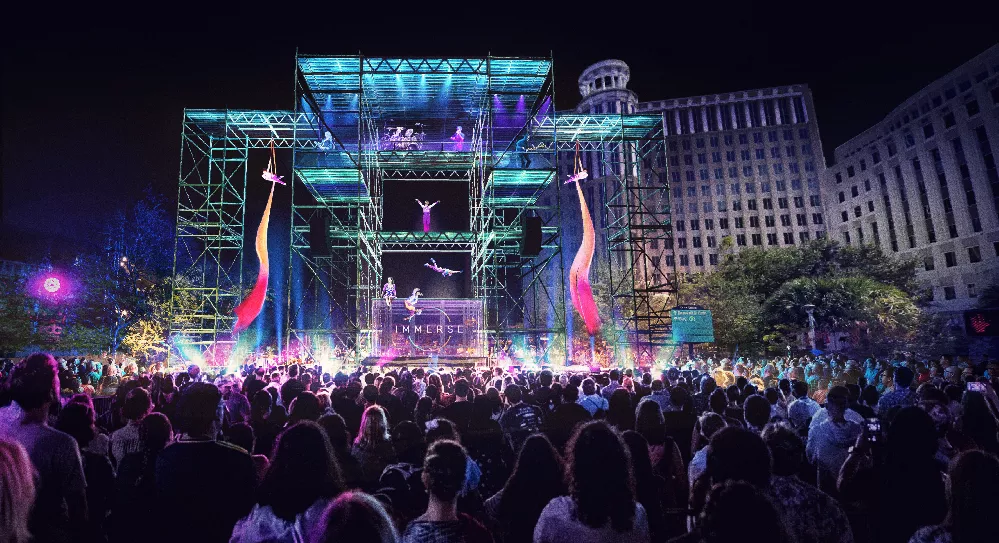
Creative City Project’s IMMERSE Festival also made the recommended list.
The task force recommended approximately $2.5 million per year for five years, rather than the original 10-year request. (Mast Newsroom)
IMMERSE transforms downtown Orlando into a large outdoor performance and arts environment featuring dancers, musicians, visual artists and interactive installations.
Supporting an event such as IMMERSE could accomplish something Orange County and Orlando have been trying to achieve for years:
Give people another reason to come downtown.
That’s particularly relevant as leaders continue working on the future of Orlando’s urban core.
The Dr. Phillips Center Could Get Much Bigger
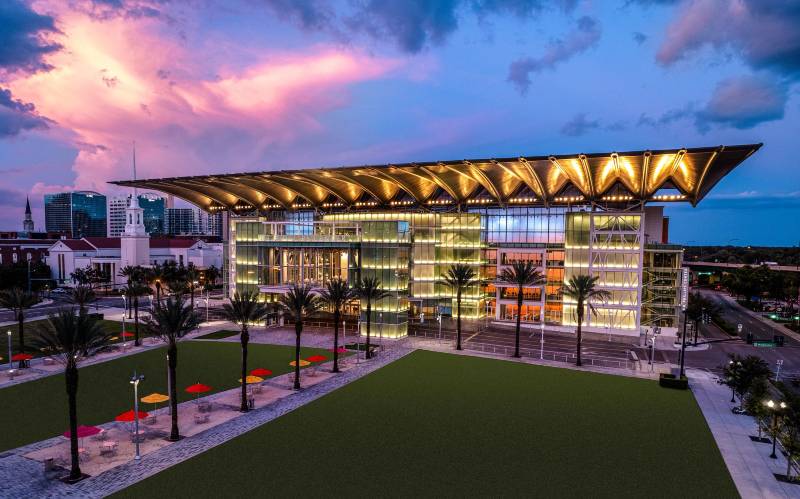
The biggest proposal to advance belongs to the Dr. Phillips Center for the Performing Arts.
Its long-range master plan carries a request of as much as $750 million, although the task force did not recommend that commissioners automatically award that entire amount. Instead, it advanced the project for further consideration without attaching a specific funding figure. (Mast Newsroom)
The plan envisions another major expansion of the downtown performing-arts campus, including additional performance space, parking and an outdoor amphitheater.
This would be a huge investment.
But unlike an attraction primarily intended for visitors, Dr. Phillips Center already functions as one of Orlando’s central civic institutions.
It hosts Broadway, Orlando Ballet, Opera Orlando, the Orlando Philharmonic, concerts and other performances throughout the year.
An expansion could increase the number and variety of events downtown.
The question commissioners will eventually need to answer is not whether Dr. Phillips Center is valuable.
It clearly is.
The harder question is:
How much public tourism-tax investment is reasonable?
At $750 million, that becomes a very different conversation.
Camping World Stadium Could Get a New Garage
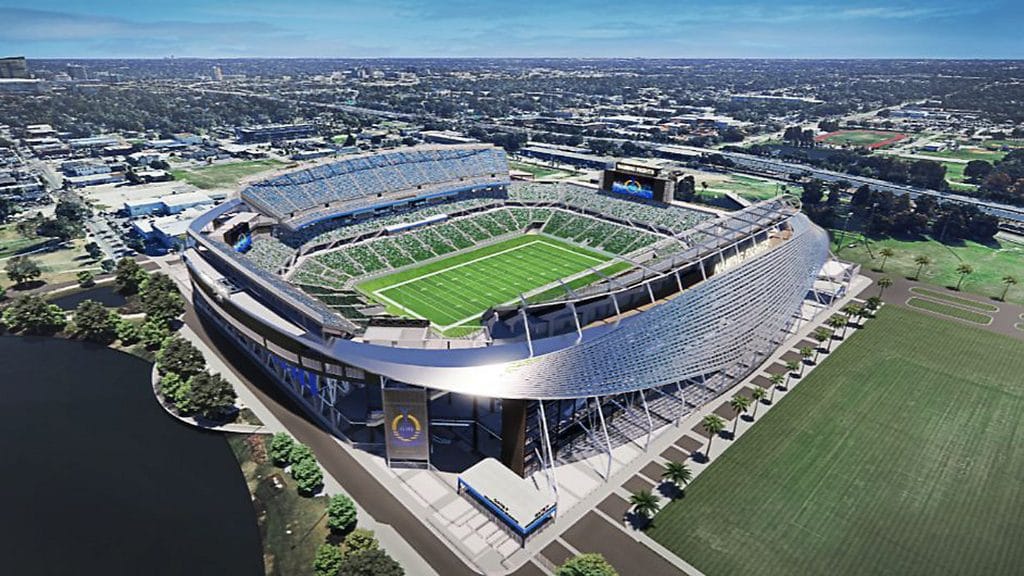
Florida Citrus Sports is seeking approximately $54 million toward a parking garage supporting Camping World Stadium and a planned event center. (Spectrum News 13)
That may sound less exciting than a museum or amphitheater.
But parking and access can determine whether major venues work effectively.
Camping World Stadium is increasingly being used to attract large sporting events, concerts and other activities.
It will also temporarily host the Jacksonville Jaguars’ 2027 home schedule while the team’s Jacksonville stadium is renovated, an arrangement Orange County estimates could generate at least $140 million in economic impact. (OCFL Newsroom)
Residents near the stadium, however, will reasonably want to know whether additional parking improves event traffic—or simply encourages more cars into surrounding neighborhoods.
The details will matter.
Ocoee Could Receive a New Recreation Destination
The City of Ocoee’s approximately $30 million proposal would expand the Forest Lake Golf Club area into a broader recreational, training, conference and entertainment destination. (CF Public)
This again represents a geographical shift in tourism investment.
Central Florida tourism spending has historically been concentrated around the convention center and attractions corridor.
Investments in Ocoee, Winter Garden, Apopka and Eatonville could distribute some of those benefits into other parts of Orange County.
That could be one of the most significant changes represented by this TDT round.
Two Huge Projects Did Not Make the Cut

What wasn’t recommended may be almost as important as what was.
The task force rejected the Orlando Dreamers’ request for $975 million toward a proposed Major League Baseball stadium.
It also declined to advance a $523 million expansion of the Orange County Convention Center and a $119 million UCF athletics request. (CF Public)
That doesn’t necessarily mean those ideas can never return.
But they are not part of the current group commissioners accepted for further funding analysis.
The Dreamers decision is particularly important because it effectively means Orange County isn’t currently preparing to devote nearly $1 billion of this available TDT capacity toward baseball.
That leaves significantly more capacity for other projects—assuming commissioners ultimately fund them.
Why Can’t Orange County Just Spend This Money on Roads?
Whenever discussions about tourism taxes arise, the same reasonable question appears:
Why are we talking about museums, stadiums and arts centers when Orange County needs roads, transportation, affordable housing and other infrastructure?
The answer is partly state law.
Florida law restricts how Tourist Development Tax revenue can be used.
Orange County currently cannot simply take hundreds of millions of dollars in hotel-tax collections and transfer them into the normal county budget for schools, routine road construction, public safety or housing. (OCFL Newsroom)
Mayor Demings has said he supports asking the Florida Legislature for more local flexibility, including possible expanded uses for transportation and other community priorities. (OCFL Newsroom)
The citizen task force similarly recommended exploring legislative changes that could broaden how tourism revenue can be used. (Mast Newsroom)
That could eventually become a much larger issue than any individual project on this list.
Orange County’s tourism economy has become so large that even a relatively small percentage of future TDT revenue could potentially have a significant impact on transportation and infrastructure—if Tallahassee allows it.
There Isn’t Enough Money to Fund Everything
This is probably the most important fact to understand about what happens next.
Despite Orange County’s enormous tourism revenue, county financial staff told commissioners there is not enough currently available capacity to fully fund all 12 recommendations while maintaining the county’s desired tourism-tax reserve of approximately $300 million. (CF Public)
That means compromises are coming.
Some projects may receive less than requested.
Some could be phased over a longer period.
Some may require additional private financing.
And some recommended projects may ultimately receive nothing.
Accepting the report was therefore the easy part.
The difficult decisions haven’t happened yet.
What Does This Mean for Orange County Residents?
Potentially quite a lot.
If even a portion of these projects move forward, residents could eventually see:
- new museums and educational attractions;
- expanded performing-arts facilities;
- more arts and cultural programming;
- restored lakes and rivers;
- new ecotourism opportunities;
- preservation of Eatonville’s cultural history;
- new attractions in Winter Garden, Ocoee and Apopka;
- expanded downtown festivals and events;
- improved facilities around Camping World Stadium.
Perhaps more importantly, this round of recommendations suggests Orange County may be thinking somewhat differently about tourism investment.
Instead of putting nearly all the emphasis on massive attractions and convention infrastructure, many of the recommended projects attempt to create things that serve visitors and residents at the same time.
That is probably a healthy direction.
Tourists generate the tax.
But residents live with what gets built.
The best tourism investments should therefore accomplish both goals whenever possible:
Give visitors another reason to come here while making Orange County a better place to live.
Whether this particular list accomplishes that will depend on which projects ultimately receive funding—and how much taxpayers are asked to commit.
For now, Orange County has selected the ideas it wants to examine more closely.
The next vote is the one worth watching.
That’s when recommendations turn into real money.

Hector
Just a guy with a lot of thoughts on a lot different things. This site is where I can share some of those thoughts. I'm in Defense and Aerospace and we will leave it at that.


You May Also Like

Things to Do in Orlando This Weekend: Sept. 25–27, 2026

Orlando Is America’s No. 2 Most Fun City — And It’s Not Just Because of the Theme Parks