
How to Save Money on Food at Disney World
How to Save Money on Food at Disney World and in Orlando: A Family Guide for 2026

Food can quietly become one of the biggest expenses on an Orlando vacation—especially for families of five, six or more. The good news: Disney lets guests bring food into its theme parks, Orlando has plenty of supermarkets and inexpensive restaurants, and a little planning can keep hundreds of dollars in your vacation budget for attractions and experiences instead.
A family vacation to Orlando can get expensive remarkably fast.
You budget for airline tickets.
Then the hotel.
Then Disney tickets.
Maybe Lightning Lane passes.
Rental car.
Parking.
Souvenirs.
And then everybody gets hungry.
Again.
For a couple traveling alone, buying every meal inside Walt Disney World might be manageable. For a family with four children, food can become an entirely different financial problem.
Suppose six people eat breakfast, lunch and dinner away from home every day, plus drinks and snacks. Even without choosing expensive restaurants, you’re buying food for 18 individual meals every day before anyone asks for ice cream.
Over a week, that’s 126 individual meals.
Fortunately, food is also one of the easiest parts of an Orlando vacation to control.
The key isn’t refusing to eat anything inside Disney World.
It’s deciding which meals are worth paying Disney prices for and which ones aren’t.
The Biggest Money-Saving Tip: Disney Lets You Bring Food Into the Parks
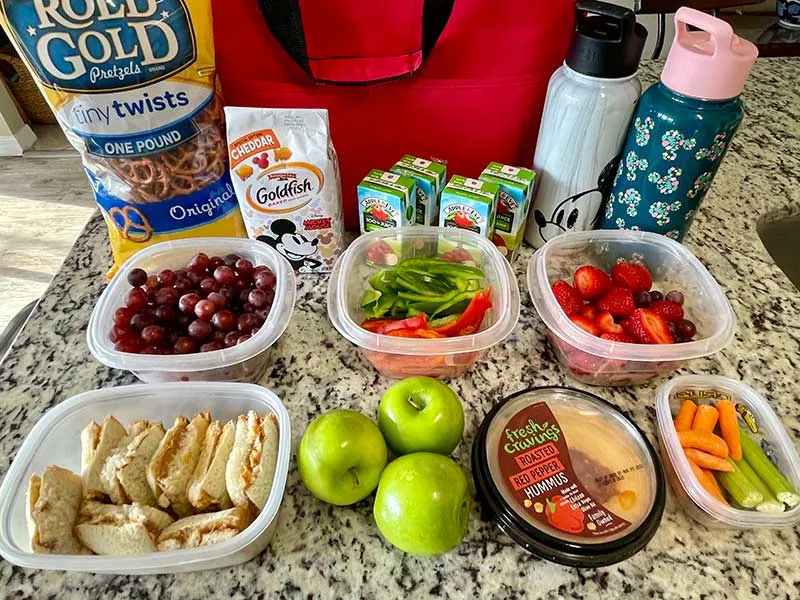
This is the first thing families should know.
Walt Disney World currently allows guests to bring outside food and nonalcoholic beverages into its theme parks, provided the items don’t require heating, reheating, processing, refrigeration or temperature control and don’t produce strong odors. Disney asks guests to tell security about outside food when entering. (Walt Disney World)
That policy can dramatically change a family’s food budget.
Instead of buying every snack once you enter Magic Kingdom, you could bring things such as crackers, granola bars, fruit, sandwiches that meet Disney’s food-safety rules, snack packs and other easy-to-carry items.
For parents, the advantage isn’t just financial.
Children don’t necessarily become hungry when you’ve conveniently arrived at a restaurant.
They become hungry in the middle of a queue.
Having snacks already in the backpack can prevent both an expensive impulse purchase and a small family crisis.
Yes, You Can Bring a Cooler—But Know the Rules
Disney also allows coolers and backpacks inside the theme parks within its size limits.
Current property rules prohibit coolers, bags or backpacks larger than 24 inches long by 15 inches wide by 18 inches high. Loose ice and dry ice aren’t permitted; Disney recommends reusable ice packs instead. (Walt Disney World)
Glass containers generally aren’t allowed in the theme parks, aside from certain small containers such as baby-food jars, and outside alcoholic beverages are prohibited. (Walt Disney World)
So don’t bring the giant beach cooler.
A small soft-sided cooler or insulated backpack is much easier to carry anyway.
Stop Paying Theme-Park Prices for Bottled Water

This may be the simplest savings of the entire trip.
Bring reusable water bottles.
Disney says cups of ice are available at no charge at food-and-beverage locations, and water fountains and bottle-filling options are available throughout the resort. (Walt Disney World)
For a large family, repeatedly buying bottled water can become an unnecessary daily expense—especially during a hot Central Florida afternoon when everybody is drinking constantly.
Bring the bottles.
Refill them.
Spend that money somewhere more interesting.
Florida heat also makes this more than a budgeting issue. Staying hydrated is important, particularly when you’re walking several miles through a theme park.
Eat Breakfast Before You Enter the Park

Breakfast is one of the easiest meals to eliminate from your theme-park budget.
You probably don’t need to spend your first hour inside Magic Kingdom buying eggs, pancakes and coffee.
If your hotel room has a refrigerator—or better yet, a kitchenette—stock it with breakfast food.
Cereal.
Milk.
Yogurt.
Fruit.
Bagels.
Muffins.
Breakfast bars.
Peanut butter.
Juice.
Coffee.
Children can eat while everyone is getting dressed.
Then you’re ready to leave.
This has another advantage: your expensive park time isn’t being spent sitting at a breakfast table.
Eat before you arrive and use your first hour when attraction lines are often shorter.
Make One Grocery Stop at the Beginning of the Vacation
Families staying for five, six or seven days should strongly consider making a supermarket trip shortly after arriving.
There are numerous full-size grocery stores around the Disney resort corridor.
For travelers around the Lake Buena Vista/International Drive side of Disney, ALDI at 11601 Regency Village Drive is a discount-focused option for breakfast food, fruit, snacks and drinks.
Visitors staying farther south around the US-192 resort corridor have Walmart Supercenter on North Old Lake Wilson Road, which combines groceries with toiletries, sunscreen and other vacation supplies.
Families around the Daryl Carter Parkway area can use Publix Super Market at Town Center at O-Town West, which also has prepared foods that can substitute for restaurant meals.
The exact store matters less than the strategy:
Buy supermarket food before you become dependent on resort food.
Don’t Have a Car? Grocery Delivery Can Still Make Sense
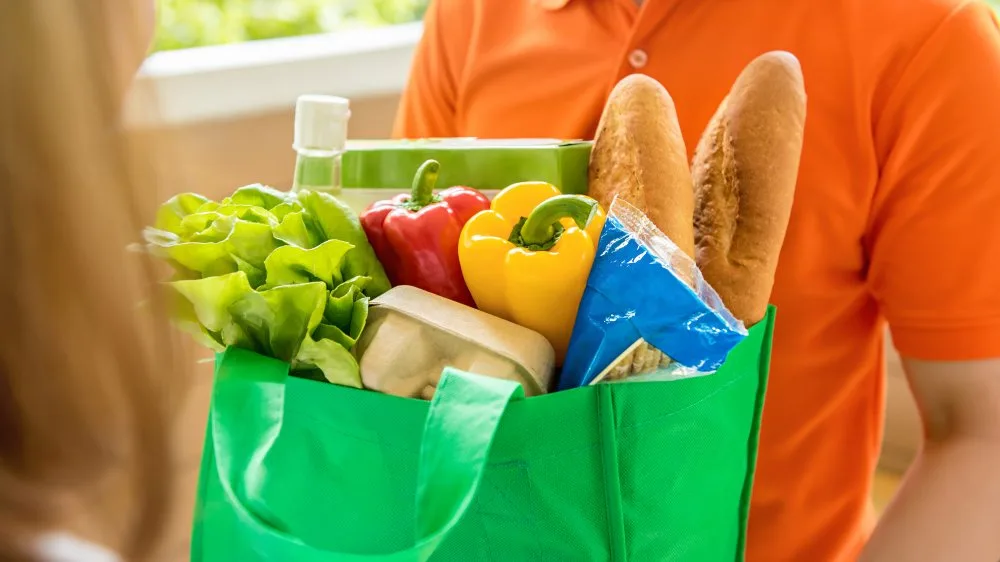
Even if you’re flying to Orlando and not renting a vehicle, grocery delivery may save money.
Many Orlando-area supermarkets offer delivery through their own services or third-party platforms.
Yes, there will usually be delivery fees, service charges and potentially a tip.
But compare that with buying breakfast, snacks, bottled drinks and late-night food for six people at resort prices for an entire week.
A single grocery delivery can still make financial sense.
If you’re staying at a hotel, confirm its current grocery-delivery policy before ordering. Hotels differ on whether staff can receive groceries for guests and whether refrigerated items require you to be present.
The Best Strategy Isn’t “Never Buy Disney Food”
That would make the vacation less enjoyable.
Food is part of the Disney experience.
Maybe your children want a Mickey-shaped snack.
Perhaps you want to eat around EPCOT.
Maybe the family has always wanted a character meal.
That’s fine.
The trick is deciding which food purchases are experiences and which are simply fuel.
A character breakfast could become one of your children’s favorite memories.
A $5 bottle of water probably won’t.
Spend money on the first.
Avoid wasting money on the second.
Try the “One Disney Meal” Strategy
For large families, one of the easiest approaches is buying only one substantial meal inside the park each day.
Eat breakfast in the hotel.
Bring snacks.
Buy lunch—or dinner—inside Disney.
Then handle the remaining meal more economically.
That might mean returning to the hotel.
Eating somewhere outside the resort.
Ordering pizza.
Picking up supermarket prepared food.
Or visiting Disney Springs, where there are options across a much broader price range.
You’re still enjoying Disney food without paying Disney prices three times a day.
Quick-Service Restaurants Are Usually Your Friend
Disney divides much of its dining into quick-service and table-service restaurants.
Quick-service restaurants operate more like counter-service establishments: order your meal, collect it and find a table.
Disney’s current dining information specifically notes that Mobile Food and Beverage Ordering is available through the My Disney Experience app at many quick-service restaurants. (Walt Disney World)
These meals usually cost considerably less than full-service restaurants, and there’s no table-service gratuity added.
They also save time.
For families trying to maximize both money and park hours, quick-service dining is generally where to start.
Independent Disney-planning site Undercover Tourist’s 2026 budget guide identifies a number of Disney quick-service meals around roughly $12 or less per person and snacks around $6 or less. (Undercover Tourist)
Look at the Menu Before Everyone Is Hungry
This sounds minor, but it can save money.
Open the My Disney Experience app while you’re waiting for an attraction and look at nearby menus.
Compare prices.
Figure out what everyone wants.
Then mobile-order before walking across the park.
If six hungry people simply enter the first restaurant they see, price stops being part of the decision.
Planning 30 minutes earlier gives you options.
Large Portions Can Sometimes Be Shared
Not everyone needs an individual adult entrée every time.
Some quick-service dishes and snacks are large enough for two lighter eaters to share, particularly when you’ve been snacking during the day.
Parents with younger children should also look closely at children’s menus rather than automatically ordering adult entrées.
The objective isn’t to leave anyone hungry.
It’s to stop buying food that ends up in the trash.
Watch what your family actually eats during the first day or two and adjust.
One Large Pizza Can Beat Six Individual Meals
Pizza is one of the classic large-family budget tools for a reason.
Instead of six entrées, buy one or two large pizzas.
This works especially well on nights when everyone returns exhausted from the parks and nobody really wants another elaborate restaurant experience.
Disney’s own dining plans recognize the family value of pizza: several Disney resort quick-service locations offer large Pizza Pickup meals as part of the plan. (Walt Disney World)
But you don’t need a dining plan to apply the same general strategy elsewhere in Orlando.
Pizza, supermarket rotisserie chicken, deli subs and family-style takeout can feed groups much more economically than six individual restaurant entrées.
Supermarket Deli Food Is an Underrated Vacation Dinner
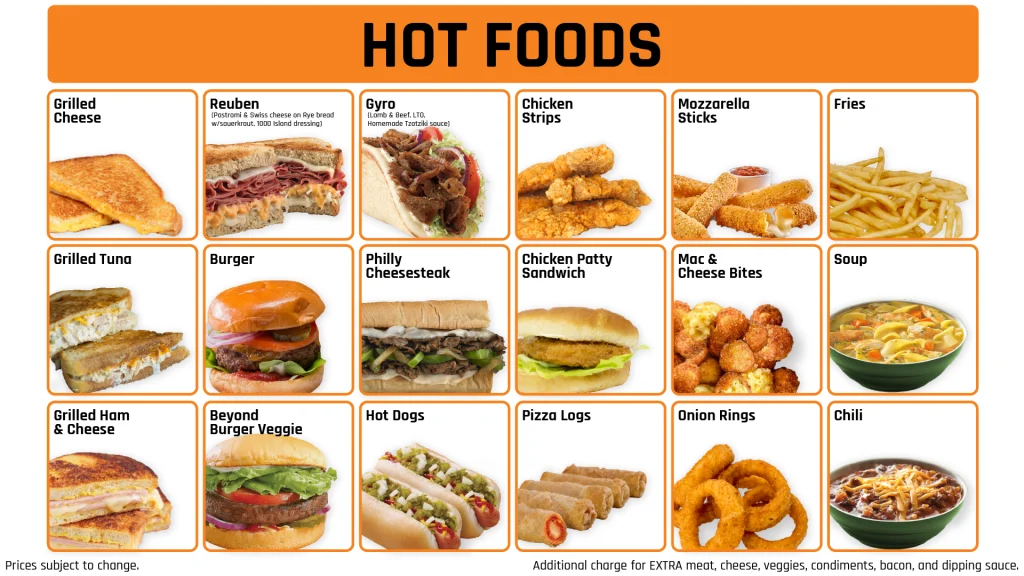
This is something tourists sometimes overlook.
You don’t necessarily have to cook to save money.
A supermarket deli can provide:
Rotisserie chicken.
Subs.
Prepared salads.
Fruit.
Hot sides.
Sushi.
Sandwiches.
Desserts.
Pick up enough for the family and take it back to the hotel.
You’re still eating prepared food.
You’re simply removing the cost of table service.
For a family of six or eight, that can make an enormous difference.
Leave the Tourist Corridor Occasionally
Orlando has more than 6,000 restaurants, and many aren’t priced like theme-park restaurants.
Visit Orlando’s recently updated 2026 budget-dining guide identifies numerous local meals for $15 or less, including options costing under $10. (Visit Orlando)
That’s important for tourists who assume every Orlando restaurant is expensive.
It isn’t.
The closer you stay exclusively to theme parks, convention centers and resorts, the easier it is to remain inside a tourist pricing bubble.
Drive 15 or 20 minutes into the neighborhoods where Orlando residents actually eat and the choices increase dramatically.
Disney Springs Can Be a Useful Middle Ground
Disney Springs gives families a way to stay within the Disney atmosphere without paying theme-park admission—and with a wider variety of dining prices.
Visit Orlando’s current budget guide points to inexpensive choices there, including hot sandwiches for under $10 and several meals below $15. (Visit Orlando)
Disney Springs also has complimentary standard parking.
So consider this strategy:
Leave the park.
Return to the hotel and rest.
Then go to Disney Springs for the evening.
You can eat, walk around, see free entertainment and get some Disney atmosphere without consuming another expensive in-park meal.
Don’t Forget About Fast Food
You’re allowed.
It’s a vacation, not a culinary competition.
There is no shame in buying inexpensive burgers, tacos or chicken one night because the family has already spent ten hours walking through EPCOT.
Large families can save considerably by using familiar chain restaurants strategically.
Look for app deals, family bundles and online coupons.
Many national fast-food chains in Orlando use the same mobile-app promotions they offer elsewhere.
Eating one $35 family meal instead of a $120 restaurant dinner doesn’t make the vacation worse.
It might mean you can afford something tomorrow that everyone actually remembers.
Hotel Choice Can Affect the Food Budget More Than You Think
When comparing Orlando hotels, don’t look only at the nightly room rate.
Look at the room itself.
Does it have a refrigerator?
Microwave?
Kitchenette?
Full kitchen?
Free breakfast?
A family staying seven nights could reasonably pay a little more for a hotel with free breakfast and still spend less overall than a cheaper room where six people need to buy breakfast every morning.
Vacation rentals can make this calculation even more dramatic.
A kitchen allows families to prepare breakfast, pack lunches and occasionally cook dinner.
For a large group, that’s a serious financial advantage.
Free Hotel Breakfast Can Be Worth Real Money
For a family of six, complimentary breakfast shouldn’t be treated as a trivial hotel amenity.
It’s six fewer meals purchased every morning.
Over a week, that means 42 breakfasts you didn’t have to buy.
When comparing hotel rates, factor that into your decision.
A hotel that costs slightly more but includes breakfast might actually be the cheaper vacation.
Pack Snacks Before You Leave Home
Don’t wait until Orlando to buy every snack.
If you’re driving, bring a supply with you.
Even travelers flying with checked luggage can sometimes dedicate a portion of a suitcase to lightweight food.
Granola bars.
Crackers.
Fruit snacks.
Trail mix.
Individual cereal boxes.
Peanut-butter packets.
Once eaten, you’ve created extra luggage space for souvenirs on the return trip.
That’s efficient vacation engineering.
Consider the 2026 Disney Dining-Plan Promotion Carefully
Families staying at Disney-owned hotels should at least investigate Disney’s current 2026 dining offer.
Disney is offering a free dining plan for children ages 3–9 when families purchase an eligible Walt Disney Travel Company package that includes a Disney Resort hotel room and a dining plan for every guest age 10 and older. Restrictions apply, and availability is limited. (Walt Disney World)
That could be meaningful for a family with several younger children.
But don’t automatically assume a dining plan is cheaper simply because it makes budgeting easier.
Compare the total package cost with how your family actually eats.
A light eater who normally shares meals and snacks may not get the same value from a prepaid plan as someone who consistently uses every included meal.
Disney itself notes that unused meals and snacks have no cash value and expire at the end of the stay. (Walt Disney World)
Resort Refillable Mugs Can Help—But Understand Where They Work
Disney dining plans currently include a resort-refillable drink mug.
Those mugs are refillable at self-service beverage stations at Disney Resort hotel quick-service locations. They aren’t a magic unlimited-soda cup throughout the theme parks. (Walt Disney World)
Families staying on property and spending significant time at their resort may find them useful.
But understand exactly what you’re buying before counting them as a major savings tool.
Character Dining Should Be Treated Like an Attraction
Character meals are expensive.
But they can also serve another purpose.
If your children meet several favorite characters while eating, you’re combining a meal with an entertainment experience.
That can make the expense easier to justify than an ordinary restaurant dinner.
The mistake is making every meal a premium experience.
Choose one.
Make it special.
Take pictures.
Enjoy it.
Then eat peanut-butter crackers tomorrow morning.
That’s how vacation budgeting works.
A Practical Food Strategy for a Large Family
For a family spending a week in Orlando, a reasonable plan might look something like this:
- Breakfast: hotel breakfast or groceries every day.
- Park mornings: bring snacks and refillable water bottles.
- Lunch: purchase one Disney quick-service meal on most park days.
- Afternoon: snacks from your backpack, with perhaps one special Disney treat to share or enjoy individually.
- Dinner: alternate between a Disney experience meal, inexpensive local restaurant, supermarket meal, pizza or takeout.
You aren’t denying the family Disney food.
You’re concentrating the money on food experiences people will actually remember.
The Goal Isn’t Spending as Little as Humanly Possible
A family vacation shouldn’t feel like an endurance test.
You’re in Orlando to have fun.
If your child has been talking about a particular Disney snack for six months, buy it.
If your family wants one character dinner, book it.
If eating at a certain EPCOT restaurant is part of the trip, enjoy it.
Budgeting works best when you’re cutting expenses that don’t improve the vacation.
Bottled water doesn’t improve the vacation.
Buying breakfast because nobody thought to buy cereal doesn’t improve the vacation.
Throwing away half of six oversized meals doesn’t improve the vacation.
Those are the places to save.
Then use that money for things your family will remember.
Maybe it’s another attraction.
A souvenir.
A special dinner.
A day at the water park.
A Cirque du Soleil show.
Or simply coming home without discovering that your credit-card balance somehow followed you back from the Happiest Place on Earth.
Orlando Can Be Expensive, But It Doesn’t Have to Be Expensive Every Minute
That’s probably the most important lesson for families visiting Central Florida.
You don’t need to operate at tourist prices 24 hours a day.
Shop where locals shop.
Bring food into Disney when the rules allow it.
Refill your water.
Eat breakfast at the hotel.
Use quick-service restaurants strategically.
Share when portions make sense.
Go off property occasionally.
And choose only a few meals that deserve to become part of the vacation experience.
A family visiting Walt Disney World will probably spend plenty of money.
That’s expected.
The objective isn’t avoiding spending.
It’s making sure you’re spending on Disney World rather than six bottles of water and six breakfasts nobody remembers.
That difference can leave a large family with hundreds of dollars more available for the things they actually came to Orlando to enjoy.
For the latest rules before packing food for the parks, check Disney’s official outside food policy and Walt Disney World property rules, since policies can change.

Hector
Just a guy with a lot of thoughts on a lot different things. This site is where I can share some of those thoughts. I'm in Defense and Aerospace and we will leave it at that.

You May Also Like
Orlando’s First Afro Food Fest Brings African and Diaspora Flavors to Festival Park

Orlando Remembers 9/11 in 2026: 25 Years Later